
Hardwood Flooring Installation in San Diego
New hardwood floors that look right the day they're installed — and decades later.
Licensed · Insured · Bonded · CSLB C-15 #1002910
Overview
Hardwood Flooring Installation in San Diego
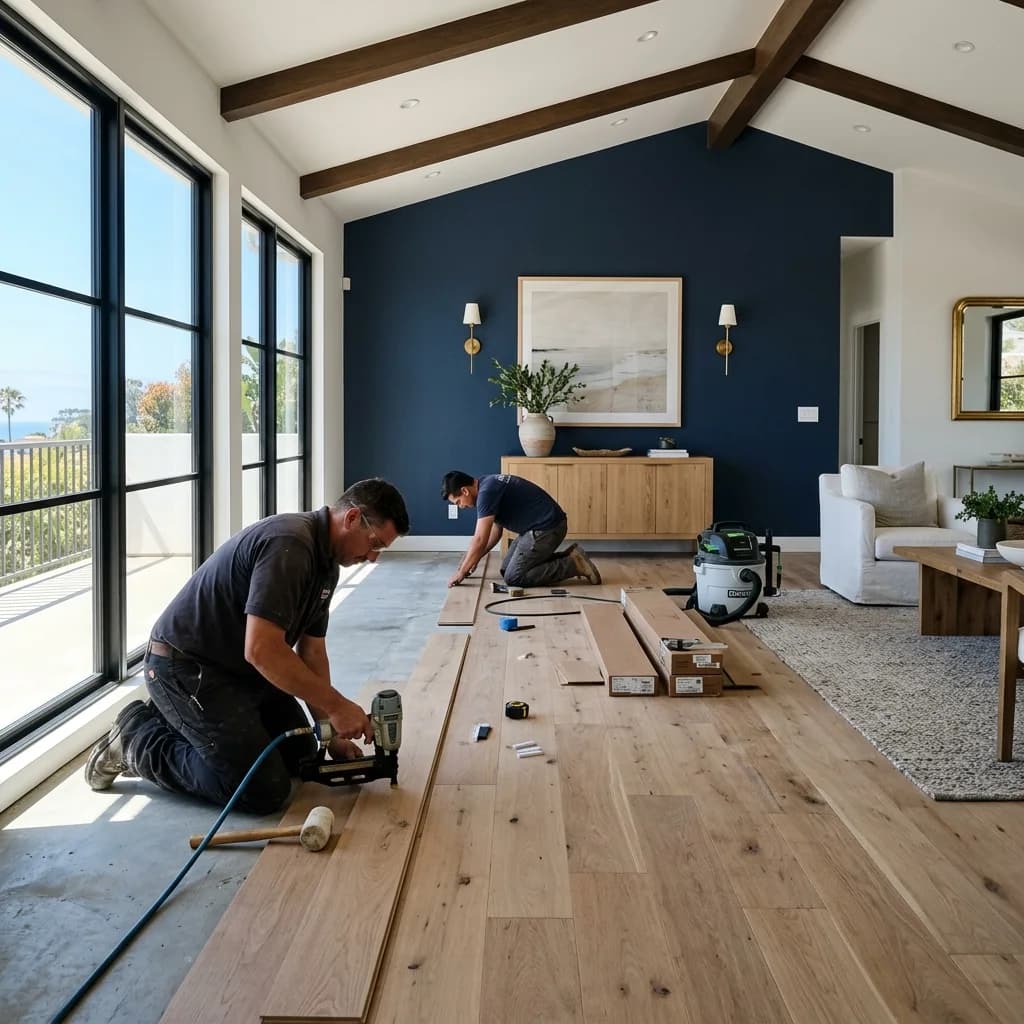
We start with an in-home measure and material consultation, confirm subfloor condition and moisture, acclimate the wood on-site, then install, sand, and finish to your chosen sheen. You get a written scope and timeline before a single board is cut.
- White oak, European oak, herringbone, and wide-plank installed by a dedicated flooring crew, not a rotating sub.
- Proper acclimation, moisture testing, and subfloor prep so your floors don't cup, gap, or squeak later.
- One licensed company (Tidal Flooring, C-15) accountable from material selection to the final board.
Do you need it?
Signs it's time for new hardwood
Installation is the right call when the existing floor can't be saved or was never right for the space. These are the signs you're looking at new wood, not a refinish:
Your current floor is laminate, vinyl, carpet, or tile you want to replace
If there's no real wood to restore, you're installing — and the subfloor underneath determines whether solid or engineered fits.
Existing hardwood is cupping, buckling, or has been sanded to its limit
When boards have moved from moisture or the wear layer is too thin to sand again, replacement is the honest answer.
You're going over a concrete slab or below-grade space
Slab-on-grade and basements move moisture differently than a raised wood subfloor, which steers the solid-vs-engineered decision.
You want a species, plank width, or pattern your current floor doesn't have
Switching to wide-plank European oak or a herringbone layout is a new install, not a refinish of what's there.
You're renovating or adding square footage that needs new flooring
Additions, ADUs, and gut remodels start from bare subfloor — the right time to choose the product deliberately.
Why install with a dedicated flooring company
Acclimation and moisture testing done right
Wood is a natural material that expands and contracts with humidity. We acclimate it on-site and test subfloor moisture before installing, which is how floors avoid gapping and cupping later.
The subfloor gets prepped, not papered over
Flatness, fasteners, and moisture barriers under the surface determine whether a floor squeaks or stays quiet. A dedicated crew addresses the subfloor instead of rushing to the finish.
One licensed company, start to finish
Tidal Flooring (CSLB C-15) handles material selection through the final board, so there's one accountable team rather than a rotating subcontractor.
Real hardwood adds lasting value
Genuine wood floors are a feature buyers look for and, when installed correctly, last for decades and can be refinished rather than replaced.
The right product for your specific home
We recommend solid or engineered based on your subfloor, climate exposure, and goals — not a single default applied to every job.
Make the right call
Solid vs. engineered hardwood: how we decide
Both are real wood and can look identical on the surface. The difference is construction: solid is one piece of hardwood through and through; engineered is a hardwood wear layer over a stable plywood core. Your subfloor and moisture exposure usually decide it.
Solid hardwood fits when…
- You're installing over a wood subfloor above grade
- You want the option to refinish multiple times over the floor's life
- Humidity is stable and well-controlled in the space
- You're matching or extending an existing solid wood floor
Engineered hardwood fits when…
- You're going over a concrete slab or a below-grade level
- The space sees more humidity swings — common closer to the coast
- You want wider planks, which stay more stable in engineered form
- You want a thick enough wear layer to still refinish down the road
Pro tips before you install
- ◆Ask for engineered with a thick sawn wear layer if refinishing later matters to you — not all engineered is created equal.
- ◆Let the wood acclimate in your home before installation; skipping this step is a leading cause of gapping and cupping.
- ◆Near the coast, control indoor humidity year-round — stable conditions protect any wood floor far more than the product choice alone.
- ◆Wider planks look beautiful but move more with humidity; engineered construction handles wide widths more predictably.
- ◆Buy a little extra material from the same lot for future repairs — dye lots and availability change over time.
What affects your investment
- Total square footage and how the rooms are laid out
- Species and grade — domestic oak vs. European or exotic options
- Solid vs. engineered, and the thickness of the wear layer
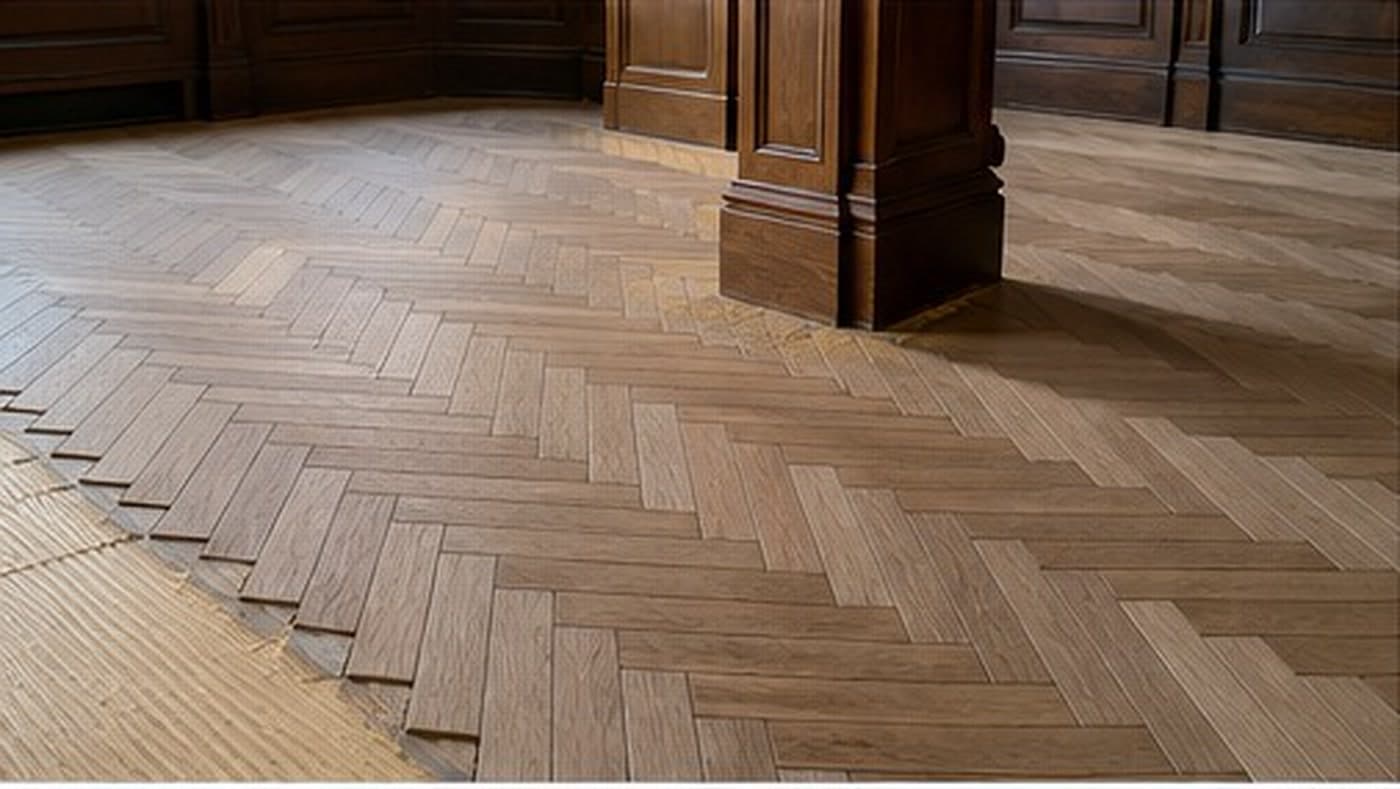
- Plank width and pattern work like herringbone or chevron, which add labor
- Subfloor prep, moisture mitigation over slab, and removal/disposal of old flooring
How it works
A clear path from first call to final walkthrough.
We start with an in-home measure and material consultation, confirm subfloor condition and moisture, acclimate the wood on-site, then install, sand, and finish to your chosen sheen. You get a written scope and timeline before a single board is cut.
Consult & assess
A free on-site visit to understand your goals, space, and conditions before anything is priced.
Scope & schedule
A written scope, material selections, and a realistic timeline you approve before work begins.
Build & walkthrough
One accountable team executes on the confirmed schedule, then walks the finished result with you.
Related work
Projects in this category.
Planning guidance
What to budget and how long it takes.
Planning range
Scoped to your project
Every hardwood flooring installation is priced to your space, materials, and scope — confirmed in a written quote after a free on-site consultation, never a one-size-fits-all number.
Typical timeline
Confirmed at consultation
Timelines vary with scope, materials, and permitting. Your project manager confirms the schedule before work begins.
FAQ
Hardwood Flooring Installation, answered.
Solid hardwood or engineered — which should I install?
It depends on your subfloor, moisture conditions, and whether you want to refinish in the future. Solid hardwood can be refinished many times; quality engineered oak is more dimensionally stable over concrete or in coastal humidity. We recommend the right product for your specific home, not a one-size-fits-all answer.
Can you match new flooring to my existing wood?
Often yes. We can blend species, plank width, and finish to tie new areas into existing floors, or refinish everything together for a seamless result. We'll show you samples and set realistic expectations before work begins.
Do you install hardwood flooring near me in San Diego County?
Yes. Tidal Flooring installs hardwood across San Diego County, including La Jolla, Del Mar, Encinitas, Coronado, Carlsbad, and Rancho Santa Fe. If you're nearby and not listed, reach out — we likely cover you.
Ready to plan your hardwood flooring installation?
One licensed, family-owned team accountable from first call to final walkthrough. Book a consultation or get a planning range to start.